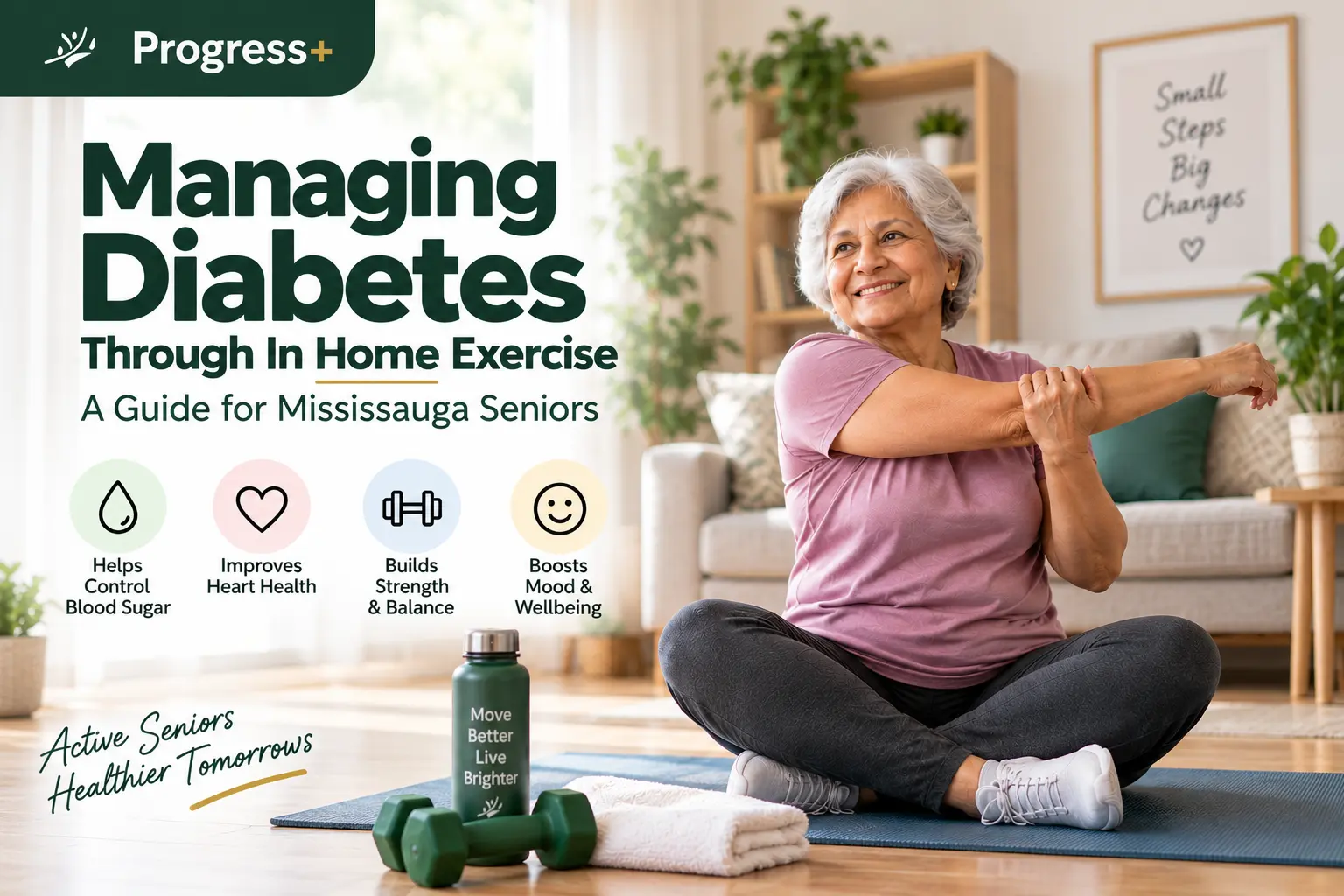
Diabetes rarely stays contained to one part of life. It shapes your energy through the day, how well you sleep at night, and how confident you feel getting up from a chair or walking across the room. If you are a senior in Mississauga managing type 2 diabetes, or you are caring for a parent who is, you already understand this better than any article could explain it to you.
Here is something worth holding onto right away, because it changes how you think about managing this condition. One of the most effective tools for blood glucose control is not a new prescription or another appointment squeezed into an already full week. It is exercise, and done the right way, it works alongside your medication rather than replacing the need for good medical care.
This guide was written specifically for Mississauga, not adapted from an article built for a different country or a different climate. We will walk through how exercise actually improves insulin sensitivity and blood sugar levels, why diabetes risk looks different here in Mississauga and across the Peel Region, especially within the South Asian community, and why the usual advice to just walk more quietly falls apart for five months of the year once winter sets in. From there, we will cover safe indoor exercise options, resistance training that protects against age related muscle loss, and cultural adjustments around floor sitting, vegetarian diets, and fasting days that most fitness content never mentions at all.
Every claim in this guide is grounded in real, published research, including data from Peel Public Health and studies on South Asian metabolic health, so you are never just taking our word for it. Our goal is simple. We want you to feel steadier, stronger, and genuinely in control of your health, with a plan that actually fits the life you live in this city.
Physician coordination: Always talk to your doctor before starting any new exercise routine, especially if you use insulin or have existing heart, eye, or nerve complications. Exercise is a powerful tool for blood sugar control, but medication timing and existing complications need physician oversight, not guesswork.
Key Takeaways
Exercise is one of the most effective tools for blood glucose control available to seniors, working through a real, measurable mechanism rather than a vague wellness claim. Moving your muscles pulls glucose straight out of the bloodstream, often within the first fifteen minutes of activity.
Peel Region carries a diabetes burden roughly 1.4 times higher than the Ontario average, which means a generic exercise guide written for another country simply was not built with Mississauga seniors in mind.
Close to 22 percent of Mississauga's population is South Asian, and this community tends to develop type 2 diabetes earlier in life and at a lower body weight, a real difference in body composition and insulin resistance, not a lifestyle failure.
Muscle is the body's biggest glucose sink, so for South Asian seniors specifically, resistance training is not optional extra credit on top of walking. It is often the single most important piece most generic advice leaves out entirely.
Thirty minutes of moderate activity typically drops blood sugar by about 3 to 6 mmol per litre, and the improvement in insulin sensitivity can last up to 24 hours, which is why consistency matters more than intensity.
Muscle strength naturally declines about 15 percent per decade after age 50 and nearly 30 percent per decade after 70, a process called sarcopenia that quietly raises both fall risk and long term blood sugar difficulty. The encouraging part is that this decline responds to training at any age.
Outdoor walking, the first suggestion in almost every diabetes exercise article, is not realistic in Mississauga for four to five months of the year. A workable plan needs real indoor options built in from day one, not treated as a backup.
Cultural realities change what a safe routine looks like. Floor to chair transitions for those who sit on the floor to pray, protein timing around vegetarian meals, and adjusted routines on fasting days are details most fitness content never addresses, yet they often decide whether a program actually sticks.
Blood sugar should be checked before exercise, roughly every fifteen minutes during longer or new sessions, and again 15 to 30 minutes after finishing, since drops can appear hours later, sometimes overnight after an afternoon workout.
Having a trained person in the room catches what a video or app cannot. A registered kinesiologist can notice early signs of low blood sugar in real time and adjust the session immediately, which is exactly why supervised in home training is one of the safest paths forward for diabetic seniors in Mississauga.
Introduction
If you are a senior managing type 2 diabetes, or you are caring for a parent who is, you already know it is never just about one reading on a glucose meter. It is about your energy through the day, how well you sleep at night, and whether you feel steady enough to trust your own body from one moment to the next. Diabetes has a quiet way of touching all of that.
Here is something worth trusting right from the start, because it is backed by real evidence, not just encouragement. Seniors with type 2 diabetes get the best blood sugar control from a mix of two things, light aerobic movement most days of the week, plus resistance training two or three times a week. Thirty minutes of gentle activity can drop blood sugar levels by roughly 3 to 6 mmol per litre, and the improvement in insulin sensitivity lasts up to 24 hours after you finish. That is a real, physiological effect, not a wellness claim dressed up to sound reassuring.
For Mississauga and GTA seniors specifically, there is a catch most guides never mention, winter. Outdoor walking stops being realistic for four to five months a year once the ice sets in, so a plan built for someone in a warmer climate simply does not transfer here. That is exactly where a home based exercise program, done safely and with proper supervision, becomes the most reliable option for aging in place with real confidence.
As always, talk to your doctor before starting any new exercise routine, especially if you use insulin or have existing heart, eye, or nerve complications.
Why Mississauga Seniors Face a Higher Diabetes Risk
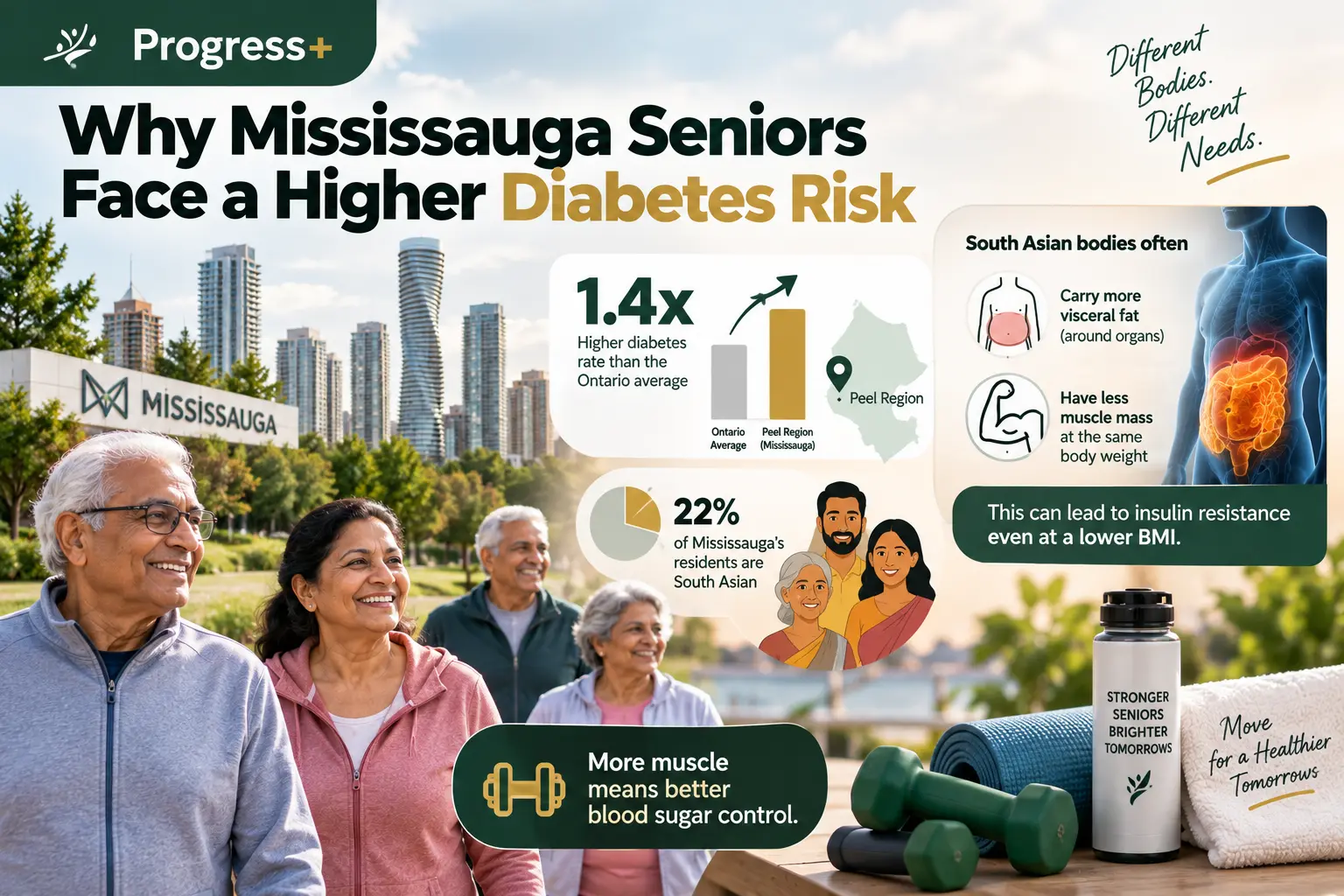
If you live in Mississauga and your doctor has mentioned your blood sugar is creeping up, please know you are not alone, and it is not just bad luck following you around. Peel Region carries a diabetes burden roughly 1.4 times higher than the Ontario average. That is a significant gap for one region, and it is not a number pulled out of thin air. Public health researchers at Peel Public Health and the University of Toronto have been tracking this closely for years, and the pattern holds up consistently across their studies.
A large part of the reason comes down to who actually lives here. Close to 22 percent of Mississauga's residents are South Asian, and published research confirms that South Asian bodies process glucose differently than many other populations. Type 2 diabetes tends to appear at a younger age and at a lower BMI here than in the general population. Someone can look slim, eat home cooked food, walk daily, and still develop insulin resistance in their fifties. That might sound confusing at first, but the explanation sits in body composition rather than effort or discipline, and it is well documented in the research. South Asians often carry more visceral fat around the organs and less skeletal muscle mass at the same body weight, and that combination raises cardiometabolic risk and pushes metabolic health downhill faster.
Here is why this matters specifically for exercise, not just for diet, and it comes down to basic physiology you can trust. Muscle is the body's biggest glucose sink, meaning it is where most excess blood sugar actually gets absorbed and used after a meal. Less muscle simply means fewer places for that glucose to go. So for South Asian seniors managing type 2 diabetes, resistance training is not an optional extra layered on top of walking. It is often the piece that fixes the actual problem underneath. Most generic advice stops at telling older adults to walk more, and while walking genuinely helps, that advice quietly skips over the one intervention, building and preserving muscle, that the evidence shows would help this specific community the most.
How Exercise Actually Affects Blood Sugar
The mechanism behind this is simpler than most people expect, and understanding it tends to make the habit much easier to stick with.
When you move, your working muscles need fuel, so they pull glucose straight out of the bloodstream. Here is the part worth trusting and remembering, during activity, muscle cells can take in glucose without needing much insulin at all. So even if you are dealing with insulin resistance, exercise opens a side door that still works regardless. That is why blood sugar levels often start falling within the first fifteen minutes of activity.
After a session of aerobic exercise, glucose uptake stays elevated while your muscles restock their energy stores. This window runs up to 24 hours, which is exactly why three long workouts a week do less for blood glucose control than short daily movement. Consistency beats intensity here, and that is genuinely good news for anyone worried they need to push hard to see results.
Most people see blood sugar drop around 3 to 6 mmol per litre after thirty minutes of moderate activity. Keep that up most days for three months and it usually shows up in your A1C levels, the three month average your doctor tracks at every checkup. Postprandial blood sugar, the spike that follows meals, tends to flatten out too. A ten minute walk around the house after dinner is genuinely one of the most underrated tools in long term diabetes management.
One honest caution worth mentioning. Very intense effort can occasionally push blood sugar up instead of down, since stress hormones release stored glucose, sometimes tipping into hyperglycemia rather than the drop you might expect. For seniors this rarely comes up, since the goal here is steady, comfortable movement rather than pushing hard, and staying within a safe exercise intensity keeps this risk low.
Why Muscle Loss Makes This More Urgent With Age
There is a clock running quietly in the background of aging, and most people only notice it once something has already gone wrong.
Muscle strength declines by about 15 percent per decade after age 50, and that decline speeds up to roughly 30 percent per decade after 70. This is not a rough estimate, it is a well documented pattern known as sarcopenia, and it does two things at once. First, it shrinks your body's glucose storage capacity, which makes blood sugar harder to control with each passing year. Second, it raises fall risk, since the very muscles that catch you when you stumble are usually the first ones to weaken. Left unaddressed, this steady decline in senior mobility is often what tips someone from healthy aging into frailty, the point where everyday tasks start needing help from someone else.
Here is something worth sitting with honestly. A fall is usually what ends independence, not the diabetes itself, but the hip fracture that follows a slip in the bathroom. Seniors with limited mobility after a fall tend to lose fitness fast, which worsens blood sugar, which then slows healing. It becomes a loop that feeds itself.
Now here is the part we want you to trust, because it is genuinely encouraging. This loop runs in both directions. Muscle responds to training at any age, including yours, whatever it may be. Published research on adults in their eighties and nineties has shown meaningful strength gains within just eight to twelve weeks of simple resistance training. Nobody is asking you to build an athlete's body. The real goal is protecting functional independence, keeping your balance sharp, and giving glucose somewhere useful to go.
Safe Exercises for Diabetic Seniors
These are the low impact exercise options that tend to work best when type 2 diabetes, joint pain, or arthritis are part of the picture.
Walking, and the Canadian winter problem
Walking is the default recommendation almost everywhere, and honestly, it works. Twenty to thirty minutes of easy walking improves cardiovascular exercise capacity, mood, and blood sugar together, all at once.
But here is what almost every article on this topic quietly assumes, that you can walk outside all year. In Mississauga, you simply cannot. From roughly November to March, icy sidewalks make outdoor walking genuinely risky for anyone with reduced balance or diabetic neuropathy, where reduced foot sensation makes slipping more likely without warning. Telling a senior to walk outside in February is not a real plan, it is a plan that only works for half the year.
Realistic indoor exercise options include walking loops inside the home, marching in place while holding a chair back, hallway laps, mall walking at Square One or Erin Mills Town Centre before store hours, and community centre indoor tracks. A walking program that survives winter is worth far more than a perfect one that quietly stops in November.
Resistance band training
Bands are the most practical strength training tool for home use, and we say that with real confidence. They cost very little, store easily in a drawer, put almost no load on the joints, and provide resistance in both directions. Seated rows, chest presses, leg extensions, and bicep curls with a light band cover most major muscle groups. Start with two sets of ten repetitions and add repetitions before you add resistance.
Chair exercises and seated exercises
If standing balance feels shaky, or you are recovering from surgery, chair exercises let you train safely without any fear of falling. Seated marches, heel raises, seated leg lifts, arm circles, and gentle torso twists all count as real muscle strengthening work. A sturdy dining chair without wheels works better than a soft armchair.
Tai chi and chair yoga
Both are excellent for balance training and flexibility exercises. Tai chi in particular has a strong evidence base for fall prevention exercises in older adults, because it trains slow, controlled weight transfer, which is exactly the skill that fails during a stumble. Chair yoga adds gentle mobility exercises for stiff hips and shoulders without any floor work required.
Light strength training with bodyweight or dumbbells
Sit to stand repetitions from a chair are, quite simply, one of the best functional fitness exercises for seniors. They train the same movement you rely on dozens of times a day. Add wall pushups, calf raises at the kitchen counter, and light dumbbells of one to three kilograms once the movement feels steady and confident.
A reasonable weekly target is gentle movement most days, plus resistance work on two or three non consecutive days, following a tailored fitness plan rather than a one size fits all routine copied from somewhere else.
Culturally Adapted Modifications for South Asian Seniors
This part rarely appears in fitness content anywhere, and honestly, it is often the reason a program quietly stops after two weeks.
Floor sitting and prayer positions
Many seniors sit on the floor to pray, eat, or spend time with grandchildren, and that matters here. If getting up from the floor is getting harder, that is a strength and mobility issue you can actually train for directly. Floor to chair transitions, practised slowly with support, help protect that ability over time. Half kneeling holds and supported squats build the same movement pattern. Losing the ability to rise from the floor is a real quality of life loss, and the encouraging part is that it is preventable.
Vegetarian diets and exercise timing
A vegetarian diet can be excellent for metabolic health, but many traditional meals are carbohydrate heavy and lighter on protein than muscle needs after training. Rice, roti, and dal in typical proportions can leave muscle short on what it needs to rebuild after resistance training. Adding paneer, curd, sprouted moong, soya, or a handful of nuts within an hour or two of training genuinely helps. If you exercise in the morning before eating, keep a small carbohydrate source nearby in case blood sugar drops.
Fasting days
Many seniors observe regular fasts, and that is worth planning around rather than ignoring. On those days, shift to light mobility work, skip resistance training, and monitor more carefully if you take insulin or sulfonylureas.
Multigenerational households
In a busy home with children and shared rooms, finding time and space is often the real barrier, not motivation. Ten minutes twice a day works just as well as one long session. A corner of the living room with a chair and a resistance band is genuinely enough equipment to work with.
Language comfort
Instructions understood imperfectly get followed imperfectly, and with diabetes, that carries real risk. Working with a trainer who speaks Punjabi, Hindi, Gujarati, or Urdu is not a small comfort, it is culturally appropriate care that meaningfully improves safety.
Monitoring Blood Sugar Safely During Exercise
Blood glucose monitoring around activity follows a simple, trustworthy rhythm once you know it.
Blood Sugar Monitoring Protocol
Before you start. Check with your glucose meter. If you are below 5.5 mmol per litre, eat 15 grams of fast carbohydrate and recheck before beginning. If you are above 16.7 mmol per litre and feel unwell, wait, since this signals hyperglycemia rather than a level exercise will safely bring down on its own.
During. For sessions longer than thirty minutes, or any time you try something new, check at fifteen minute intervals until you learn how your own body responds.
After. Check again 15 to 30 minutes after finishing, and stay aware for several hours afterward. Exercise induced hypoglycemia can appear late, sometimes overnight after an afternoon session, which catches a lot of people off guard.
Warning signs to stop for immediately: shakiness, sudden sweating, dizziness, confusion, blurred vision, a racing heart, or unusual irritability. Sit down, take 15 grams of fast acting sugar such as juice or glucose tablets, wait fifteen minutes, and recheck. Always keep that sugar source within arm's reach before you begin, not tucked away in the kitchen.
A continuous glucose monitor removes most of this guesswork by showing the direction your levels are moving, not just a single number at one point in time. Many Ontario private plans now cover them, which makes this technology more accessible than people often assume. These exercise precautions take a minute to follow and prevent almost every serious incident before it starts.
The Long Term Payoff, What Consistent Exercise Actually Changes
It helps to know what you are actually working toward, beyond the numbers on a glucose meter.
Consistent movement brings improved blood sugar control and better insulin response over months, not days, so patience genuinely matters here. It also builds increased strength and improved balance, which together bring down fall risk more effectively than either one alone. Many seniors notice better mobility in everyday tasks first, getting up from a chair, climbing stairs, carrying groceries, before they notice the number on their meter changing.
There are knock on effects too that rarely get mentioned in clinical advice, but deserve real trust. Regular activity is linked to reduced medication dependence over time for some seniors, always in coordination with a doctor, never by adjusting medication on your own. It also supports improved mental health and reduced isolation, especially with in home sessions that bring genuine social contact into the week. Better sleep and increased energy levels tend to follow within a few weeks of starting, often before the blood sugar improvements become obvious on paper.
None of this happens from one good week. It happens from showing up on the ordinary days too, the ones that do not feel special at all.
Why In Home Training Works Better for Diabetic Seniors
A video cannot see you. An app cannot notice that your colour has changed or that your words have started slurring slightly. A person standing in the room can, and that difference is exactly why we believe in this approach so strongly.
That is the real distinction for diabetic seniors specifically. Exercise induced hypoglycemia often shows up in behaviour before the person even feels it themselves. One on one training means someone is watching for that in real time, stopping the session, and handling it correctly without delay.
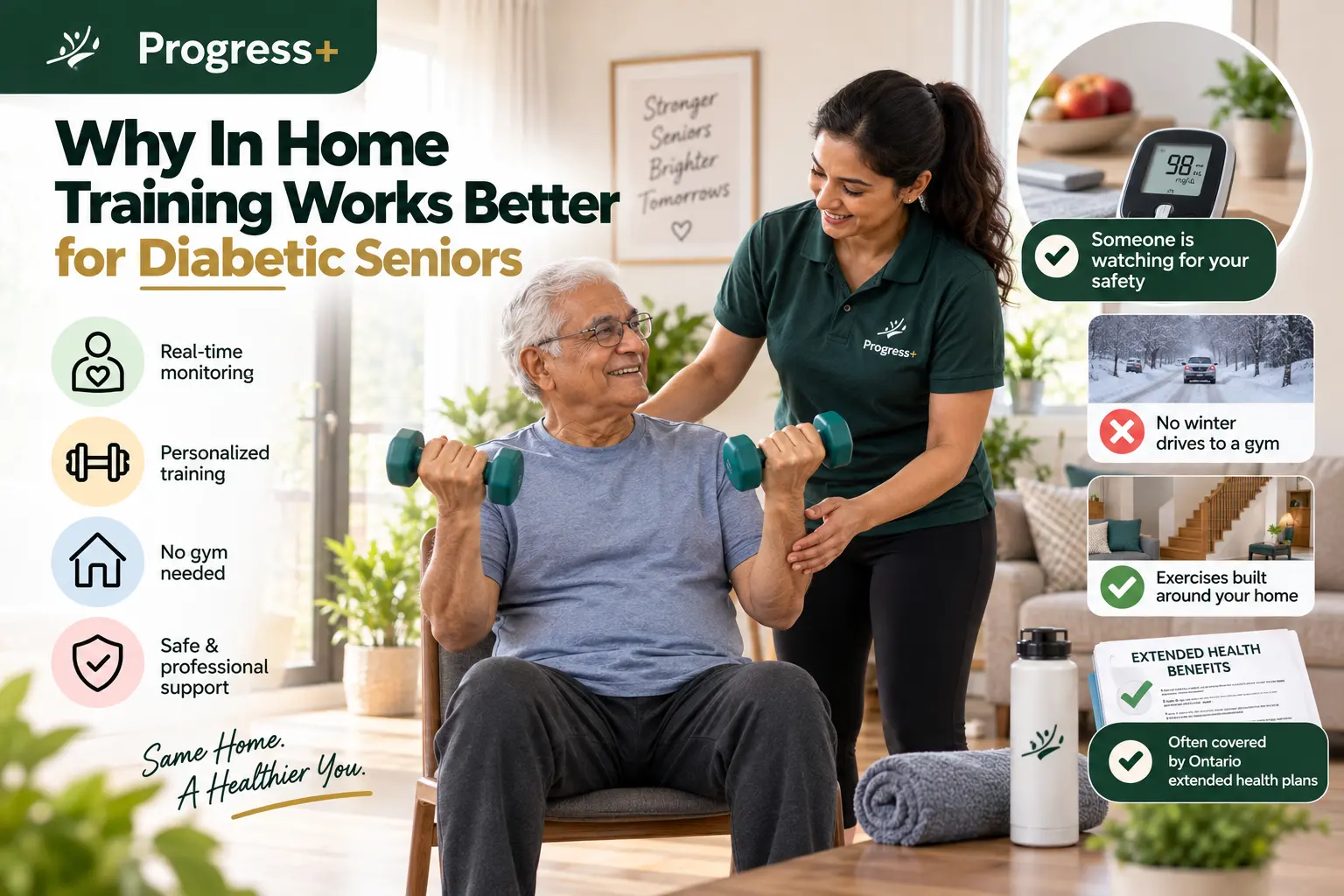
Supervision by a registered kinesiologist adds another meaningful layer of trust. Kinesiologists are trained specifically in exercise for chronic conditions, so the program accounts for neuropathy, retinopathy, joint pain, and medication timing, rather than treating diabetes as a single generic label. A certified personal trainer working within a home based exercise program can also progress you at a pace that genuinely matches your recovery, something group classes simply cannot replicate.
There are practical advantages too, worth mentioning honestly. No winter drive to a gym. No waiting for equipment. No self consciousness about moving slowly in a room full of younger people. The exercises are built around your actual furniture, your actual stairs, and your actual floor space, which means the personalized exercise program transfers directly into daily life rather than staying stuck in a gym setting. And because many extended health plans in Ontario cover kinesiology, insurance eligible fitness support is often more affordable than people assume going in.
Getting Started Safely
Talk to your doctor before you begin, especially if you use insulin, have heart disease, or have been told you have retinopathy or neuropathy. Ask specifically whether your medication timing needs adjusting around activity, since this is an easy detail to overlook.
Then start smaller than you think you should, and trust that this is the right approach. Ten minutes, three days a week, for two weeks is a genuinely solid starting point. Safe exercise progression means adding time first, then frequency, then resistance, in that order. Most people who quit did too much too soon in week one. A short senior fitness assessment before you start makes this progression accurate instead of guesswork.
A few non negotiables worth taking seriously. Wear proper footwear for diabetics, closed shoes with a wide toe box and cushioned soles, and check your feet after every session for redness or blisters you may not feel due to reduced sensation. Keep hydration steady, since dehydration concentrates blood glucose. Wear medical identification if you train alone. And keep fast acting sugar beside you every single time, without exception.
Frequently Asked Questions
Is exercise safe for seniors with diabetes?
Yes, for the large majority. Exercise is genuinely one of the most effective tools for blood glucose control at any age. The precautions involve monitoring, medication timing, and foot care rather than avoiding movement altogether. Clear it with your doctor first, particularly if you have heart, eye, or nerve complications.
How often should diabetic seniors exercise?
Aim for some gentle movement most days, since the blood sugar benefit fades within about 24 to 48 hours, plus resistance training on two or three non consecutive days. Around 150 minutes a week total is the standard target, but shorter daily sessions genuinely work better than long weekend ones.
What exercises lower blood sugar fastest?
Moderate aerobic exercise that uses large muscle groups works quickest, such as brisk walking, cycling, or continuous marching in place. Levels typically begin falling within fifteen minutes. A ten to fifteen minute walk after meals is one of the most effective single habits for cutting postprandial blood sugar spikes.
Can seniors with diabetes do strength training safely?
Yes, and honestly, they should. Resistance training builds the muscle that stores glucose, which improves insulin response over the long term. Use light resistance bands or bodyweight exercises, keep breathing steady rather than holding your breath, and get supervision for the first few weeks to build confidence.
What is the best time of day to exercise with diabetes?
For most people, one to two hours after a meal, when blood sugar is naturally rising, works best. This gives the biggest benefit with the lowest risk of going low. Avoid training at the peak action time of your insulin unless your doctor has specifically advised otherwise.
How can seniors prevent low blood sugar during exercise?
Check before starting, eat a small snack if you are under 5.5 mmol per litre, keep fast acting sugar within reach, avoid injecting insulin into a limb you are about to work, and stay alert for several hours afterward since delayed drops are genuinely common.
About the Author
This guide was written by the team at Progress Plus, an in home personal training service built specifically for seniors across Mississauga and the wider Greater Toronto Area. Every program at Progress Plus is led by a Registered Kinesiologist, regulated by the College of Kinesiologists of Ontario, which means the exercise guidance you have just read is not general fitness advice. It reflects real clinical training in how movement affects chronic conditions like type 2 diabetes, arthritis, and cardiovascular health in older adults.
Our team works directly inside the homes of Mississauga seniors every week, and that hands on experience shapes how we think about content like this. We see firsthand how Canadian winters interrupt outdoor walking routines, how floor sitting and prayer positions affect mobility for many South Asian clients, and how a personalized exercise program needs to fit a person's actual home, culture, and daily rhythm rather than a one size fits all template. This guide reflects that real world experience alongside published research from sources like Peel Public Health and the University of Toronto, so what you have read here is grounded in both clinical training and genuine, local, hands on work with seniors managing diabetes and blood sugar control.
If you have questions about starting a safe, in home exercise program, our Registered Kinesiologists are available for a free assessment to help you find the right starting point for your body and your goals.
Conclusion
Diabetes management in Mississauga is not the same problem it is elsewhere, and that is worth trusting as the core message of this whole guide. Higher regional prevalence, a large South Asian community with earlier onset risk, and five months of winter that shut down outdoor walking all change what a genuinely workable plan looks like. Generic advice quietly ignores all three.
What actually works is steady, low impact movement you can do indoors, resistance training that rebuilds the muscle your blood sugar depends on, and modifications that fit how you actually live, pray, eat, and share your home. Done consistently, that combination improves blood sugar control, reduces fall risk, and protects the independence that matters most for aging in place with confidence.
If you are not sure where to start, a senior fitness assessment in your own home is the simplest first step. It takes an hour, it costs nothing, and it tells you exactly what your starting point really is.
This article is general information and reflects best practices at the time of writing. It is not medical advice. Always consult a family doctor or a Registered Kinesiologist before starting any new exercise program, especially when managing type 2 diabetes, using insulin, or living with heart, eye, or nerve complications.
Book Your Free Assessment Today
A complimentary in-home assessment with a Registered Kinesiologist in Mississauga. We'll build a diabetes-safe indoor program around your body, medication schedule, and daily rhythm, not a template.