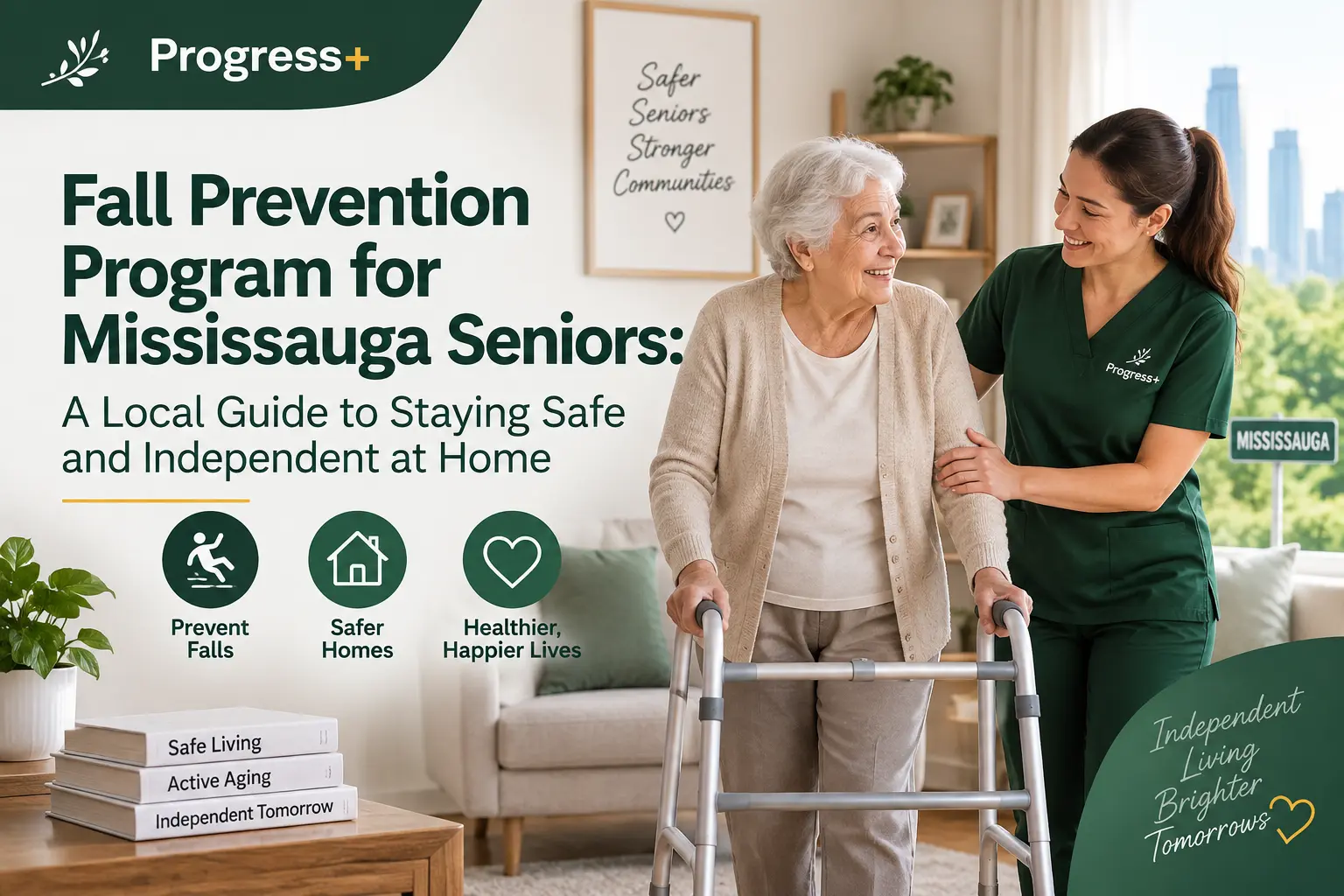
Falls aren't inevitable, but ignoring the risk usually isn't a great strategy either. One in three seniors over 65 falls every year, and in Mississauga, where seniors now make up close to 17 percent of the population, that's not a statistic happening somewhere else. It's happening in homes across this city, often quietly, long before anyone decides to do something about it.
The reassuring part is that fall prevention actually works, and it works best when a few things happen together rather than relying on one fix. Strength and balance training make the biggest difference. Simple, consistent exercises like single leg stances, side step ups, standing marches, and heel raises build the leg strength, hip strength, and core stability that let the body catch itself before a fall turns into an injury.
Home environment matters just as much as the body does. Loose rugs, poor lighting, missing grab bars, and icy winter steps are some of the most common and most fixable risks, especially in the apartments, condos, and townhomes so common across Mississauga.
None of this has to be expensive. The City of Mississauga and Peel Region run free fall prevention workshops and community exercise classes, which are a solid starting point for a lot of seniors. For those who need more focused attention, recovering from surgery, managing arthritis or Parkinson's, or simply preferring one-on-one support, in-home personal training with a Registered Kinesiologist offers a safer, more tailored path forward.
Medical conditions and medications play a bigger role than most families expect. Arthritis, Parkinson's, osteoporosis, and neuropathy all raise fall risk in their own way, and something as ordinary as a medication side effect or an overdue eye exam can quietly be part of the picture too. A conversation with a doctor is always a smart first step alongside any exercise plan, not an afterthought.
At the end of the day, this isn't about fear. It's about giving Mississauga seniors the strength, confidence, and independence to keep living life fully, safely, in the home and community they already love. Whether that starts with a free community class or a private in-home program guided by a Registered Kinesiologist, the real first step is simply taking action today, not waiting for a fall to force the conversation tomorrow.
Key Takeaways
Falls are far more common than most families realize. One in three seniors over 65 falls at least once a year, and in a city like Mississauga, where seniors make up close to 17 percent of the population, this isn't a small or distant problem, it's happening in homes right around you.
Mississauga carries its own unique fall risks. High rise living, seniors aging in place, icy Ontario winters, and everyday habits within the city's South Asian and Chinese communities all mean fall prevention here needs a local lens, not a one size fits all approach.
Strength is the first line of defense. Weak legs, hips, and core muscles make it much harder for the body to recover when balance slips, building strength through simple, consistent exercise is one of the most powerful things a senior can do.
Balance training deserves equal attention. Exercises like single leg stances, side step ups, and standing marches train the body to stay steady during real, everyday movements, not just in a gym setting.
Health conditions change the approach, not the possibility. Arthritis, Parkinson's, osteoporosis, and neuropathy all raise fall risk, but with the right guidance, seniors managing these conditions can still train safely and see real progress.
Medications and eyesight are easy to overlook, but they matter. A dizzying side effect or an overdue eye exam can quietly raise fall risk without anyone noticing, a conversation with a family doctor should always accompany any exercise plan.
Free help genuinely exists in Mississauga. The City of Mississauga and Peel Region offer free fall prevention workshops and community exercise classes that are a great, low pressure starting point for many seniors.
Private in-home training fills a real gap. For seniors recovering from surgery, managing a specific condition, or simply wanting one-on-one attention, in-home training with a Registered Kinesiologist offers a safer, more personalized path than a group class can.
Home safety matters as much as physical training. Loose rugs, poor lighting, missing grab bars, and icy front steps are some of the easiest and most overlooked fall risks to fix, especially across Mississauga's apartments and townhomes.
The best time to start is before a fall happens, not after. This isn't about fear, it's about giving Mississauga seniors the confidence and independence to keep living life fully, on their own terms, in the home they love.
Introduction
If you've got a parent or grandparent living in Mississauga, this one's for you.
Here's a number that doesn't get talked about enough, one in three seniors over 65 falls at least once a year. And in Mississauga specifically, that risk is only getting more relevant. Seniors now make up close to 17 percent of the population, up from somewhere between 13 and 15 percent just five years ago across Peel Region. That's not a slow trend, that's a city aging quickly, with more people than ever navigating stairs, icy driveways, and long apartment hallways on their own.
The good news, and there really is good news here, is that falls are largely preventable. Not through luck, and not through wrapping someone in bubble wrap, but through a combination of the right strength work, a safer home, and knowing which local resources actually exist. This guide was put together with input from a Registered Kinesiologist regulated by COKO, so what you're reading is grounded in real clinical practice, not generic listicle advice.
Why Fall Prevention Matters More in Mississauga
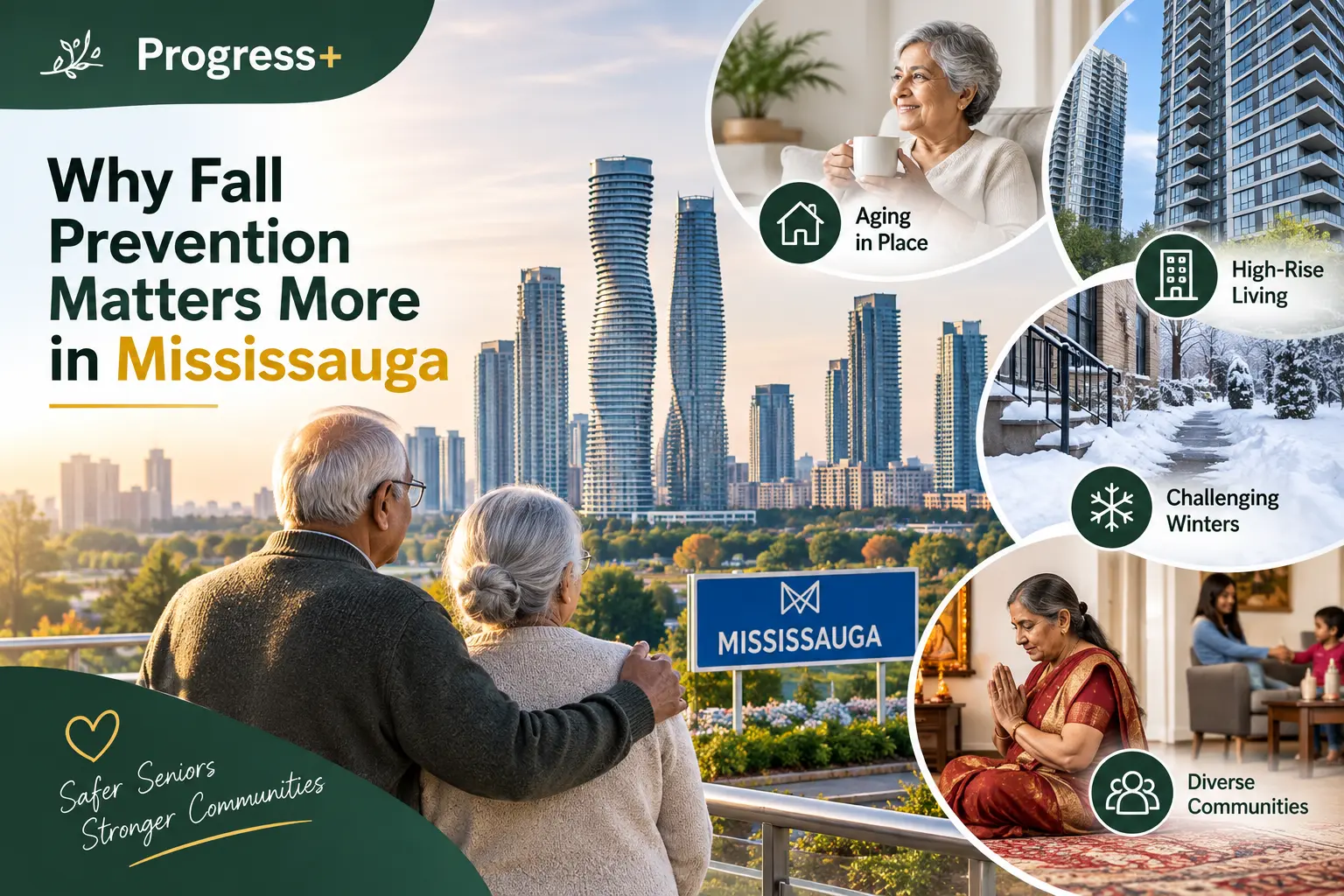
Every city has seniors. Not every city has Mississauga's specific mix of circumstances.
A lot of seniors here are aging in place. Kids grow up, move out, start their own households, and mom or dad stays put in the same home for decades. That often means living alone, or with just a spouse, without someone around every day to catch the small warning signs, a bit more shakiness getting off the couch, a slightly slower walk down the hall.
Then there's the housing stock itself. Mississauga has one of the highest concentrations of high rises and apartments in the region, roughly 78 percent of all apartment units in Peel Region sit right here in this city. Long hallways, elevators, tight bathrooms, that's a genuinely different risk landscape than a bungalow with a backyard.
Winter doesn't help. Anyone who's lived through an Ontario winter knows what an icy front step feels like underfoot, and for a senior, the short walk to grab the mail can quietly become the most dangerous part of the day.
And there's one more piece worth naming honestly, without turning it into a stereotype. Mississauga is home to large South Asian and Chinese senior communities, and some everyday habits common in those households, sitting on the floor for prayer, wearing a saree or dupatta near stairs, living in a busier multi generational home with more furniture underfoot, can add small amounts of fall risk that rarely get discussed openly. Naming it isn't about judgment. It's about being aware, so it can actually be planned for.
Understanding Fall Risk in Older Adults
Here's something worth sitting with, falls almost never happen for just one reason. It's rarely a single dramatic cause, it's usually a handful of small, unremarkable things quietly stacking up until one day balance just isn't there anymore.
Muscle strength is a big piece of it. Strong legs, hips, and a stable core give the body a real fighting chance to catch itself the second balance starts to slip. And that strength doesn't hold steady on its own as we age, it fades naturally unless someone is actively doing something to keep it.
Balance and gait matter just as much, and it helps to know the difference. Balance is simply the body's ability to stay upright. Gait is the pattern of how a person walks, stride length, steadiness, rhythm. When either one weakens, even a little, fall risk climbs sharply, sometimes in people who otherwise feel completely fine day to day.
Chronic conditions shift the picture further, and each one does it differently. Arthritis brings stiffness and pain that quietly changes how someone moves through an ordinary day. Parkinson's affects coordination and balance directly, not as a side effect but as part of the condition itself. Osteoporosis works silently in the background, weakening bone density until a small stumble that would've meant nothing years ago suddenly becomes something serious. Neuropathy, often tied to diabetes, dulls sensation in the feet, making it harder to feel uneven ground before it's too late to adjust.
Medication and vision deserve far more attention than they usually get, mostly because they're so easy to miss. Some prescriptions cause dizziness or drowsiness that nobody thinks to connect to fall risk. Poor eyesight makes a loose rug or an uneven step much harder to spot in time to avoid it. This is exactly why a genuinely solid fall prevention plan doesn't start with exercise alone, it starts with a conversation with a family doctor about current medications and a recent eye exam, running alongside any physical routine, not instead of it. This kind of physician coordination is the piece a lot of general advice online skips over entirely, and it's often the difference between a plan that looks good on paper and one that actually holds up in real life.
Signs a Senior Is at Risk of Falling
The warning signs are often there long before an actual fall. A few things worth watching for:
Holding onto walls or furniture while walking, even at home
Hesitating or moving noticeably slower on stairs
Looking shaky or straining to stand up from a chair or couch
A near miss, even one that didn't end in a fall
Growing anxiety about walking outside, especially on uneven pavement
More frequent complaints of tired or weak legs
Any one of these on its own might not mean much. A few of them together is a real signal to start building a plan now, rather than waiting for a fall to force the conversation.
Free and Publicly Funded Fall Prevention Programs in Mississauga
Before getting into paid options, it's worth knowing what's already available in this city at no cost, because it genuinely is worth knowing.
The City of Mississauga runs Safe and Strong Seniors workshops through Mississauga Fire and Emergency Services. These are free, two hour sessions held at community centres like Meadowvale, Mississauga Valley, and Malton, covering gentle balance exercises, fire safety basics, and even a free home visit to check smoke and carbon monoxide alarms.
Peel Region also runs exercise and falls prevention classes at community locations across the area, led by regulated health professionals, often free or very low cost for eligible participants.
For seniors dealing with a more specific medical situation, Trillium Health Partners operates a dedicated Falls Prevention and Bone Health clinic, and Lifemark Seniors Wellness runs structured exercise and falls prevention programming throughout the region.
These programs are a great fit for seniors who are already reasonably mobile, enjoy the social side of a group setting, and don't need one-on-one attention. For a lot of people, honestly, this is exactly the right place to start.
In-Home Personal Training and Private Fall Prevention Programs
That said, group programs simply aren't the right fit for everyone, and there's no shame in admitting that. Fixed class times, waitlists, and a room full of people can make it genuinely hard to get the kind of focused, patient attention that someone recovering from surgery, or managing a specific condition, actually needs.
That's where private, in-home fall prevention training earns its place. Instead of the senior travelling somewhere on someone else's schedule, a qualified trainer comes directly to their home, at a time that actually works for them, with a plan built around their body, their history, and their specific goals, not a template pulled off a shelf.
A properly run program should always begin with a real assessment of strength, balance, and gait, not a generic workout handed out to everyone who signs up. From there, the trainer builds a customized routine centred on functional strength, exercises that mirror the movements that matter most in daily life, like standing up from a chair, managing the stairs, or reaching for something on a shelf without losing footing. Progress gets tracked over time, and the plan evolves as the person gets stronger and steadier, rather than staying frozen at week one.
Here's the detail worth actually paying attention to, because it's the part that separates a real program from a marketing page. When the person leading that program is a Registered Kinesiologist, regulated by the College of Kinesiologists of Ontario, that's not just a fitness coach with a nicer sounding title. It's a licensed health professional trained to work safely around conditions like arthritis, Parkinson's, or post surgery recovery, someone who understands the difference between pushing progress and pushing too far. That distinction matters enormously when the actual goal is preventing a fall, not just getting a workout in for the day.
Free vs Paid, Which Fall Prevention Option Is Right for You
Both paths have real value. The honest answer is that the right one depends entirely on the person.
Free Community Programs
Private In-Home Training
Best for
Generally mobile seniors who enjoy group settings
Post surgery recovery, specific conditions, or those preferring one-on-one attention
Schedule
Fixed class times
Flexible, built around the senior's routine
Supervision level
Group based, general guidance
Personalized, ongoing tracking by a Registered Kinesiologist
Cost
Free or very low cost
Paid service, often partially covered by extended health insurance
Setting
Community centres
Senior's own home
Plenty of families end up using both, and that's a completely reasonable approach. A senior might join a free community class for the social connection and general movement, then add a few weeks of private in-home training after something like hip surgery, to rebuild strength safely under closer supervision.
On cost, OHIP generally doesn't cover general fitness or fall prevention personal training. But many extended health insurance plans offer partial coverage for physiotherapy or kinesiology services, and some providers offer direct billing to simplify the process. A quick call to your insurance provider clears this up fast.
Fall Prevention Exercises for Seniors
These exercises target exactly what matters most for fall prevention, leg strength, hip strength, core stability, and balance. Always check with a doctor before starting anything new, and always keep a sturdy chair or wall within arm's reach.
Single leg stance
Stand near a wall or chair for support. Lift one foot slightly off the floor and hold for 10 to 15 seconds, then switch sides. This builds balance and strengthens the muscles around the ankle, knee, and hip together.
Side step ups
Using a low, stable step, step sideways up and down with slow, controlled movement. Builds hip and leg strength while training the body for sideways motion, exactly what's needed to step around furniture or off a curb safely.
Standing marches
Holding onto a chair, lift one knee at a time as if marching gently in place. Simple, low strain way to build leg strength and coordination.
Heel raises
Standing near a support, slowly rise onto your toes, then lower back down with control. Strengthens the calf muscles, which do a lot of quiet work in keeping balance while walking.
Weight shifting
Stand with feet hip width apart and slowly shift weight from one foot to the other. Trains the body to manage balance during everyday movements like walking or turning.
A simple starting routine:
Exercise
Sets
Reps or Time
Single leg stance, supported
2 sets
10 to 15 seconds per side
Side step ups
2 sets
8 per side
Standing marches
2 sets
20 total
Heel raises
2 sets
12 to 15
Weight shifting
2 sets
10 per side
If arthritis is part of the picture, keep every movement slow and completely pain free, and skip anything that causes joint discomfort. If Parkinson's is a factor, these exercises should always be supervised, since balance can shift from one day to the next in ways that are hard to predict on your own.
Home Safety Checklist for Mississauga Seniors
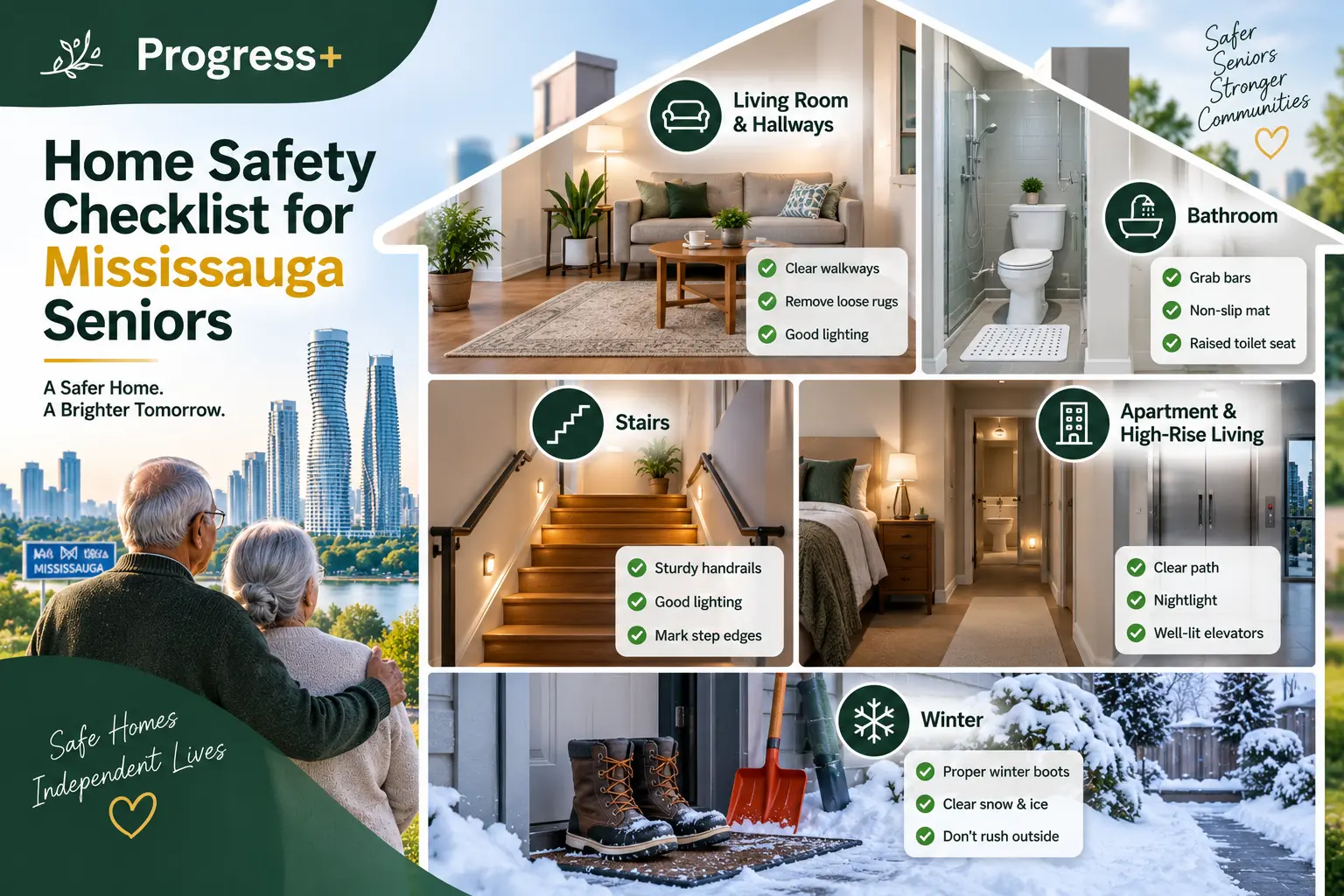
A strong, steady body matters, but a safe home matters just as much, maybe more. Since so many seniors here live in apartments, condos, and townhomes, this checklist is built around the layouts you actually see across the city.
Living room and hallways
Secure or remove loose rugs, keep walkways clear of cords and clutter, make sure lighting is bright enough to see clearly after dark.
Bathroom
Install grab bars near the toilet and inside the shower, add a non-slip mat in the tub, consider a raised toilet seat if standing is difficult.
Stairs
Common in many Mississauga townhomes. Make sure handrails are solid on both sides, add lighting at the top and bottom, mark step edges with bright tape if they're hard to see.
Apartment and high rise living
Keep the path from bed to bathroom completely clear, add a nightlight in the hallway, make sure elevator buttons and entrances are well lit.
Winter
Keep proper winter boots with real grip right by the door, ask a family member or neighbour to help clear snow and ice from the entryway, and resist rushing outside right after a snowfall, freshly cleared paths can still be icy underneath.
Frequently Asked Questions
How many seniors fall each year in Ontario?
About one in three seniors over 65 falls at least once a year, and falls remain the leading cause of injury related hospital visits among older adults in the province.
Is fall prevention training covered by OHIP or insurance?
OHIP generally doesn't cover general fitness or fall prevention personal training. Many extended health insurance plans do offer partial coverage for physiotherapy or kinesiology services, so it's worth a call to your provider. Free community fall prevention classes through the City of Mississauga and Peel Region are available at no cost.
What is the best exercise to prevent falls in seniors?
A combination of balance and strength work tends to give the best results. Single leg stances, side step ups, and standing marches are simple, safe, and genuinely effective when done with proper support nearby.
How do I make a home safer for a senior living alone?
Start with better lighting, clear walkways, grab bars in the bathroom, and securing or removing loose rugs. For apartment or townhome living, pay extra attention to stairs, hallways, and the path between the bedroom and bathroom.
Is fall prevention training safe for seniors with arthritis or Parkinson's?
Yes, as long as the program is designed by a qualified professional, such as a Registered Kinesiologist, who understands how to work around these conditions. Every movement should stay slow, controlled, and completely pain free.
Take the Next Step Toward a Safer, More Independent Life
Fall prevention isn't about living in fear. It's about giving Mississauga seniors the strength, confidence, and independence to keep doing the things they genuinely love, in the home they've always known, for as long as possible.
If personalized, one-on-one attention feels like the right fit, in-home personal training brings a Registered Kinesiologist straight to your door in Mississauga, with a plan built entirely around you. And if a free community class feels like the right first step instead, that's a wonderful place to begin too. Either way, the most important thing is simply starting today, before a fall ever has the chance to happen.
About the Author
This blog was written and reviewed with guidance from the team at Progress Plus, an in-home personal training service built specifically for seniors across the GTA, including Mississauga. Every recommendation here passes through a Registered Kinesiologist, regulated by the College of Kinesiologists of Ontario. That's not a title mentioned for the sake of it, it means the exercises, safety advice, and program guidance above come from someone trained to work safely with real conditions like arthritis, Parkinson's, and post surgery recovery, not generic fitness content pulled together for clicks.
At Progress Plus, the belief is simple, seniors deserve fitness guidance they can actually trust, from professionals who understand aging bodies, not just workout trends. Our kinesiologists work directly in seniors' homes across Mississauga and the surrounding GTA, getting to know each person's history, ability, and goals before ever building a plan around them.
Conclusion
Nobody wants to think about a parent or grandparent falling. It's one of those worries that sits quietly in the back of your mind, especially once you start noticing them holding onto the counter a little longer, or hesitating a beat more on the stairs. But here's the part worth holding onto, that worry can turn into action, and that action genuinely works.
Mississauga is a city full of seniors who've spent decades building their homes, their routines, and their independence right here. They deserve the chance to keep living that life fully, without fear quietly steering every decision they make. And the research backs this up clearly, falls aren't just bad luck. They happen when strength fades, balance weakens, and homes slowly become less safe without anyone quite noticing. Which also means they can be prevented, as long as the right steps are taken early rather than after the fact.
Whether that means signing up for one of the free workshops the City of Mississauga runs, joining a community exercise class through Peel Region, or bringing in the focused, one-on-one support of an in-home program led by a Registered Kinesiologist, the path forward doesn't have to be complicated. It just has to start somewhere.
Take a look around the home today. Check the lighting. Secure that loose rug. Add a grab bar if it's missing. Try a few of the balance exercises from this guide. Have that conversation with a doctor about medications or an overdue eye check. These are small, unglamorous steps, but taken consistently, they're what actually keep seniors steady, strong, and confident for years to come.
Fall prevention was never about eliminating every risk in life. It's about giving Mississauga seniors the strength and support they need to move through their days with confidence, stay independent in the home they love, and keep doing the things that matter most to them. Every recommendation in this guide comes from a Registered Kinesiologist regulated by the College of Kinesiologists of Ontario, because when it comes to a parent's safety, guesswork isn't good enough. That's a goal worth working toward, starting today.
This article is general information and reflects best practices at the time of writing. It is not medical advice. Always consult a family doctor or a Registered Kinesiologist before starting any new exercise program, especially when managing chronic conditions like arthritis, Parkinson's, osteoporosis, or diabetes.
Book Your Free Assessment Today
A complimentary in-home assessment with a Registered Kinesiologist in Mississauga. We'll take a real look at strength, balance, and home safety, then build a plan around your parent's life, not a template.